Art Styles
What Is Sumi-e?
Discover the Japanese art of ink painting, where a few deliberate brushstrokes can express atmosphere, movement and inner character.
Discover the ArtInk, Space and Restraint
An Art Form Built on the Essential
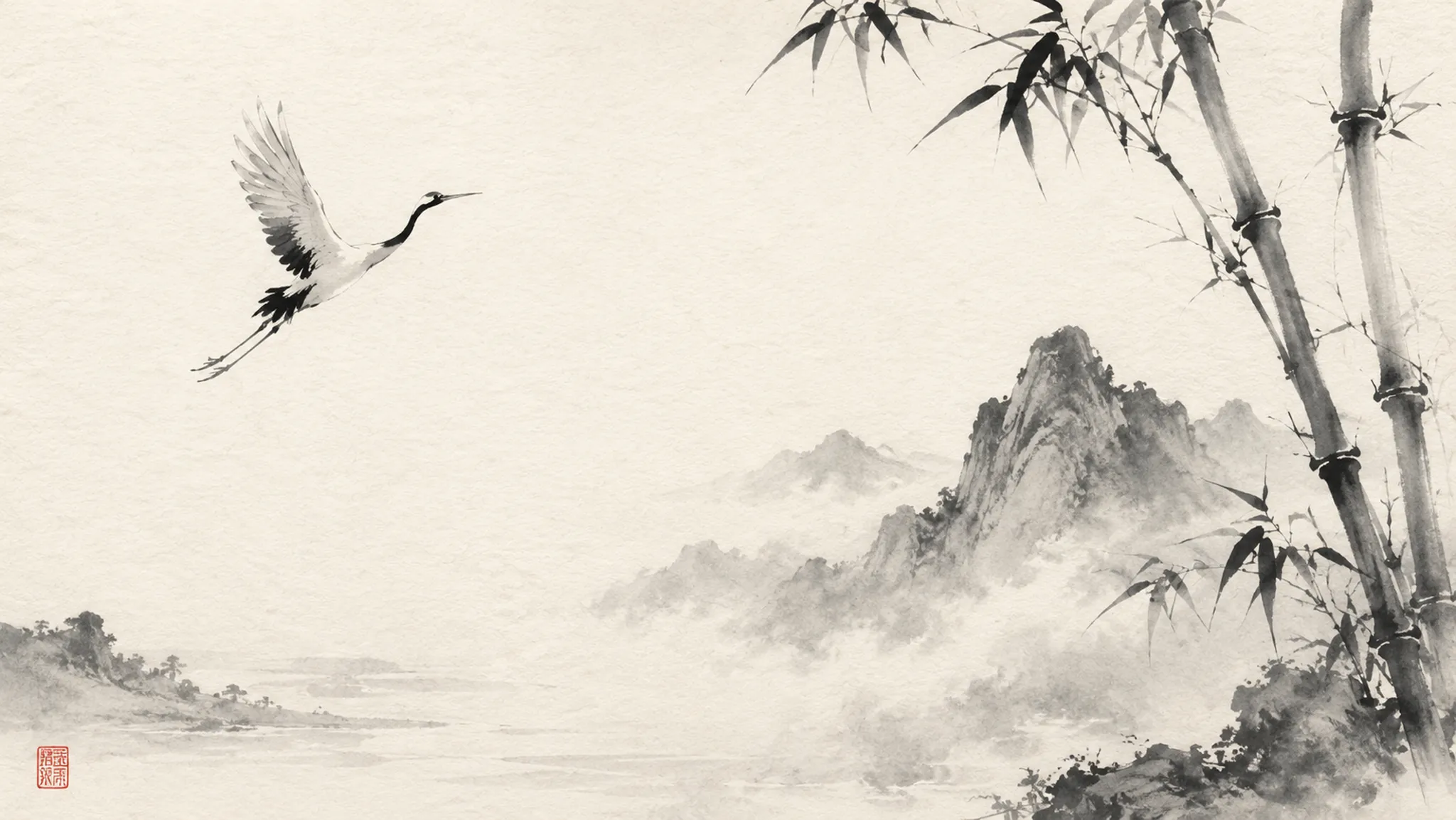
Sumi-e is a traditional East Asian form of ink painting in which expressive brushwork, tonal variation and empty space are used to communicate the essence of a subject.
Rather than describing every visible detail, Sumi-e seeks the most meaningful line, movement or silhouette. A mountain may be suggested through a few washes of diluted ink. A bamboo stem may appear through one decisive gesture. Mist, water and distance may be represented by areas where the paper remains almost entirely untouched.
The word “sumi” refers to black ink, while “e” means painting or picture. Although the palette may appear limited, traditional ink can produce an extensive range of tones—from dense black to the palest grey. These variations allow the artist to express texture, light, depth and atmosphere without relying on conventional colour.
Sumi-e is closely associated with observation, discipline and control. The brushstroke cannot be repeatedly corrected in the same way as an opaque painted surface. Every gesture therefore records speed, pressure, direction and confidence.
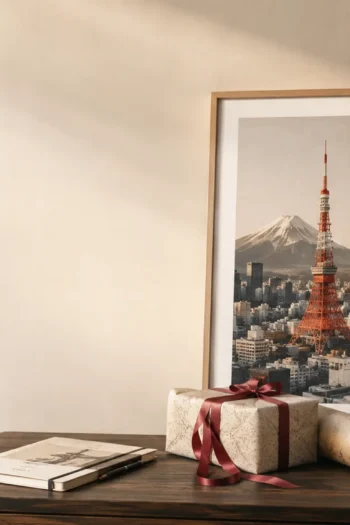
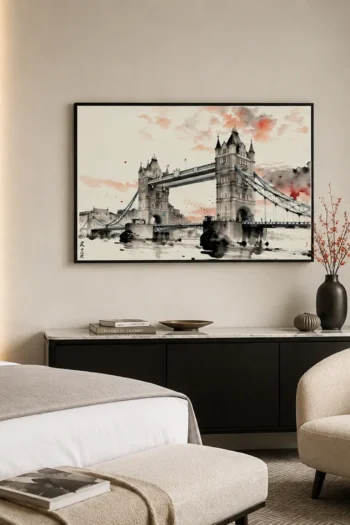
In contemporary interiors, Sumi-e-inspired art is valued for its quiet presence. Monochrome compositions sit naturally alongside pale walls, natural timber, stone, linen and restrained modern furniture. Their use of negative space also allows architectural rooms to remain visually open.
History of the Style
From Chinese Ink Painting to Japanese Visual Culture
Origins in China
Ink painting developed within Chinese artistic and calligraphic traditions. Brush, ink, paper and inkstone became central tools for both writing and image-making.
Arrival in Japan
The practice travelled to Japan through cultural and religious exchange. It became especially influential within Zen communities, where directness and disciplined observation held deep significance.
Japanese Development
Japanese painters developed distinctive approaches to landscape, nature, seasonal subjects and composition, often giving empty space an active role within the image.
Contemporary Influence
Today, Sumi-e principles influence illustration, graphic design, architecture and wall art. Artists continue to explore how minimal means can communicate complex atmosphere and emotion.
Characteristics
The Visual Principles of Sumi-e
Economy
Only the lines and tonal fields essential to the subject are retained.
Movement
Pressure, rhythm and speed remain visible within each brushstroke.
Negative Space
Untouched paper represents air, silence, water, mist and distance.
Tonal Depth
Diluted ink creates greys and transparent washes from one black pigment.
Traditional Subjects
What Is Commonly Depicted in Sumi-e?
Natural subjects are central to Sumi-e because they allow artists to study movement, growth, weather and seasonal change. Bamboo is valued for the direct rhythm of its stems and leaves. Orchids offer elegant curves, while plum blossom branches contrast angular structure with delicate flowers.
Mountain landscapes are another important theme. Peaks, rivers, waterfalls and distant buildings can be arranged to create a sense of physical space and contemplative distance. Birds, fish and animals are often reduced to their most recognisable gestures.
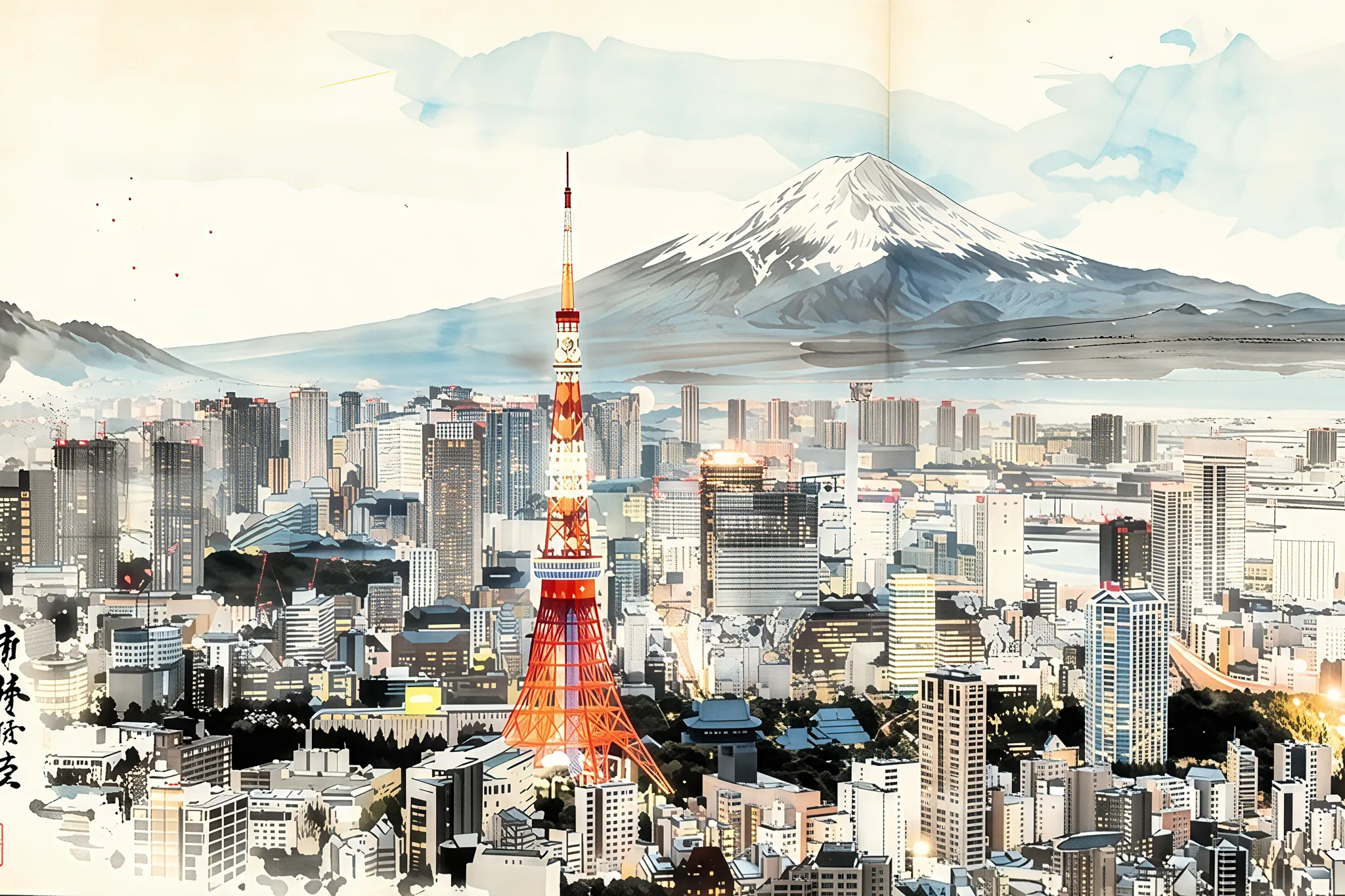
Contemporary artists apply the same principles to architecture and urban environments. A skyline, bridge or historic monument may be simplified until its defining silhouette remains, allowing an iconic city to be recognised without photographic detail.
Ideas & Inspiration
Sumi-e in Contemporary Visual Art


Featured Artworks
Cities Interpreted through Sumi-e
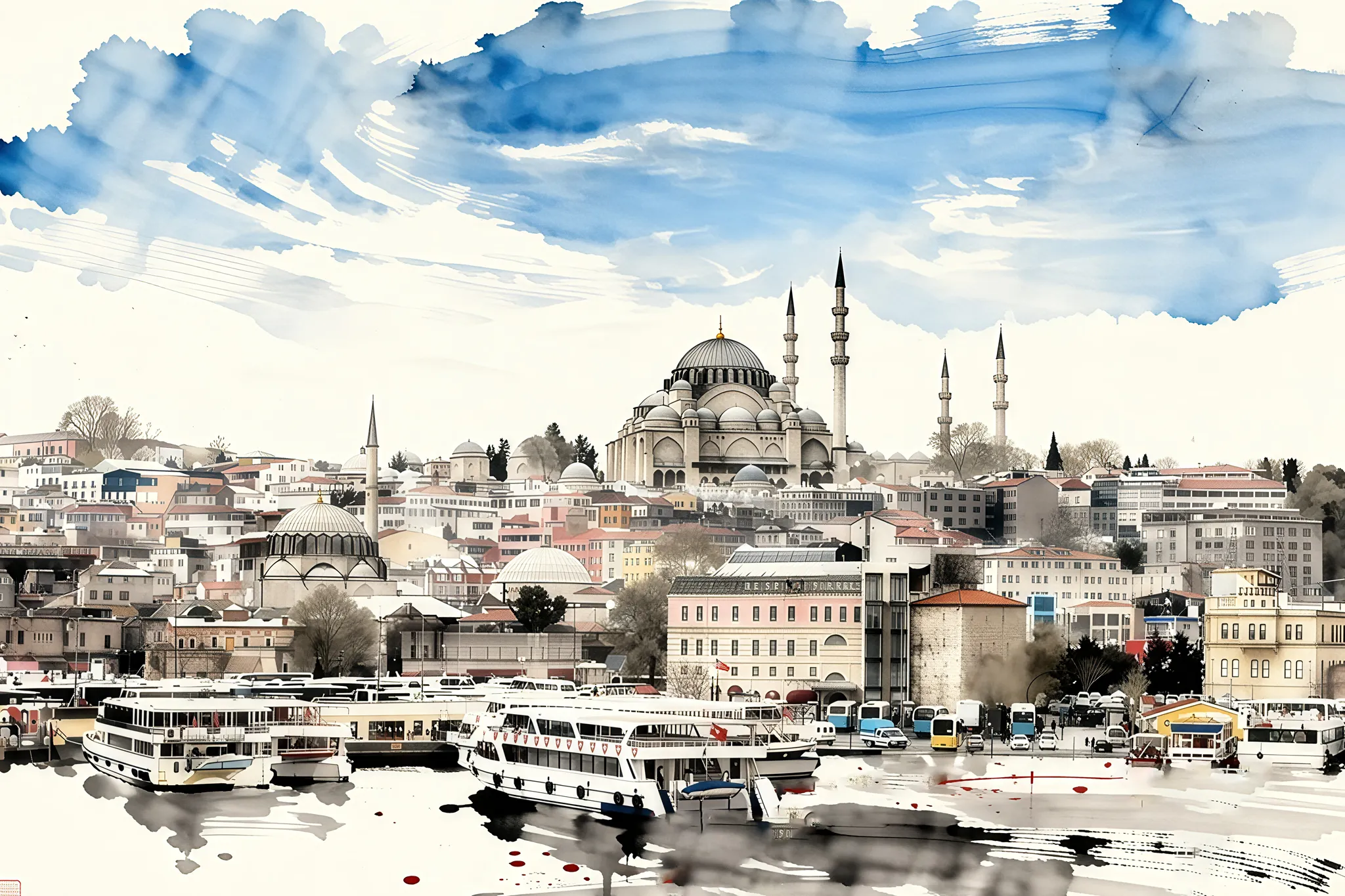
Istanbul in Sumi-e
Mosque architecture, nature and stillness in a restrained composition.
View artwork


New York in Sumi-e
Vertical urban rhythm interpreted with the simplicity of ink painting.
View artworkStyle Comparison
Sumi-e and Related Japanese Art Styles
Sumi-e
Focuses on black ink, tonal washes, expressive brushwork and significant areas of negative space.
Japanese Tradition
May combine ink-inspired drawing with colour, decorative rhythm, architectural composition and references to historical Japanese art.
Modern Anime
Uses contemporary character design, cinematic lighting and dynamic visual storytelling inspired by Japanese animation.
Frequently Asked Questions
Sumi-e FAQ
Is Sumi-e Japanese or Chinese?
The art form developed from Chinese ink-painting traditions and was later adopted and transformed in Japan, where it became closely connected to Japanese aesthetics and Zen cultural environments.
Does Sumi-e use only black ink?
Traditional Sumi-e is primarily based on black ink diluted with water. The dilution produces many grey tones. Some related traditions may also introduce restrained colour.
Why is empty space important in Sumi-e?
Empty space is an active part of the composition. It may suggest mist, water, sky, silence, distance or an area intentionally left open to the viewer’s imagination.
What materials are used for Sumi-e painting?
Traditional practice uses an ink stick, inkstone, brush and absorbent paper or silk. These tools are closely related to East Asian calligraphy.
Does Sumi-e art suit modern interiors?
Yes. Its monochrome palette, minimal composition and generous use of open space make it particularly suitable for modern, Japandi and Scandinavian interiors.